1/200 WWII IJN AIRCRAFT CARRIER SHINANO

This Shinano was built from a kit of materials comprising fiber glass, photoetched, resin, metal and plastic.
The then Imperial Japanese Navy considered Shinano being the most top secret weapon alongside Yamato and Musahi without leaving any significant references behind, from which a room was ironically open for modelers of today to research, explore and 'create' the details.


Shinano and the Navy she served...
The IJN Shinano, initially a battleship of Yamato Class converted to an aircraft carrier after the loss of four aircraft carriers in the Battle of Midway in 1942, was sunk by the USS submarine Archerfish on its maiden voyage in 1944. Despite being a massive and powerful warship, Shinano succumbed to four torpedo strikes on account of inexperienced handling and incomplete watertight compartments.
Displacement: 65,800 t (64,800 long tons) (standard)
Length: 265.8 m (872 ft 2 in)
Beam: 36.3 m (119 ft 1 in)
Draught: 10.3 m (33 ft 10 in)
Installed power:
-
12 × water-tube boilers
Propulsion: 4 × shafts; 4 × geared steam turbines
Speed: 28 knots (52 km/h; 32 mph)
Range: 10,000 nmi (19,000 km; 12,000 mi) at 18 knots (33 km/h; 21 mph)
Complement: 2,400
Armament
-
8 × twin 12.7 cm (5 in) DP guns
-
35 × triple 2.5 cm (1 in) AA guns
-
12 × 28-barrel 12 cm (4.7 in) AA rocket launchers
Armor
-
Waterline belt: 160–400 mm (6.3–15.7 in)
-
Flight deck: 75 mm (3 in)
Aircraft carried: 47


Imperial Japanese Navy Aircraft Carriers In Operation Footage
Shutterstock
Imperial Japanese Navy March & Footage
Shutterstock

This photograph of Shinano was taken during her sea trials in Tokyo Bay on November 11, 1944, by a civilian aboard a tug. Only one print of the picture was retained. Camouflage is clearly seen on starboard side to confuse American submarines.
Believed to be the only clear picture of it left
From naval_encyclopedia.com

Shinano in dry dock of Yokosuka Port at Tokyo Bay
(white arrow)
From Destination's Journey

Shinano after launch at same port (at the top right corner of the photo)
From naval_encyclopedia.com

The close-up photo taken by a recce B29 . Ten days after commissioning, on November 29 1944, she was torpedoed and sunk by U.S. submarine, Archerfish, en route to Kure naval base for complete fitting out.
From naval_encyclopedia.com

This illustrates the locations of torpedo hits and the subsequent flooding areas. Red indicates compartments immediately flooded, Orange slowly flooded, and Yellow deliberate flooding to offset the ship's list, but in vain.
From naval_encyclopedia.com
The Building the ship on a desk
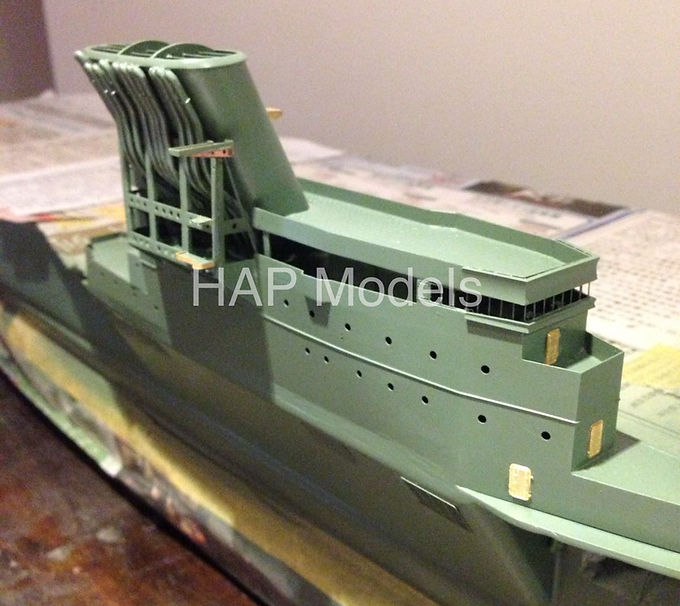
Took some time to decide the paints and finally came to settle with my liking . The suggestions from different references were studied but not fully followed.

A closer look..... Needed to finish the interior first, including the lower bridge and hangars, before working on the deck, catwalks and hull.

Basic deck painting and AA gun terraces completed.

WWII IJN vessels would look more stunning with intricate riggings across majestically built bridge.

Many apparatus such as telescopes and AA guns were sourced from different manufacturers including the 3D printers.

Some Zeros were diecast while some others, like these you are watching at, are from board game kits. Certainly required a lot of re-painting and weathering.

Shinano had never been operational in reality, Now she was resurrected to join a battle with its IJN flag and streamer hanging side by side!
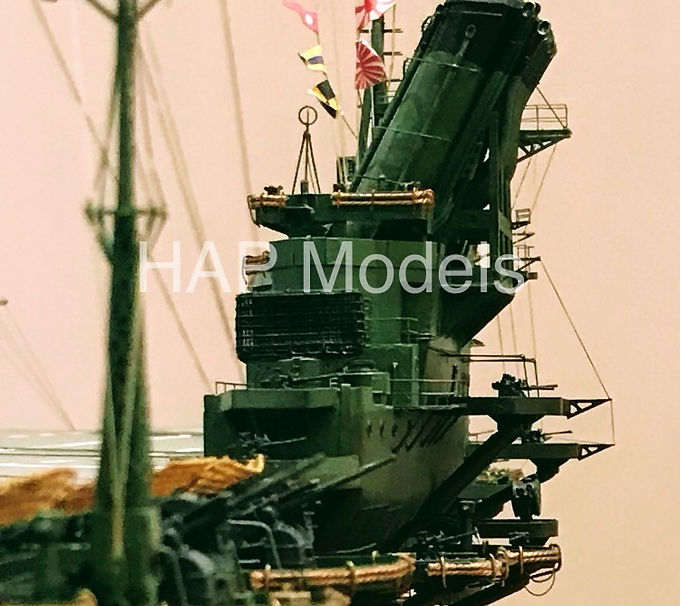
A particular affection to all IJN aircraft carriers built with a huge and inclined funnel on starboard side. Taiho and Junyo obviously on the list.
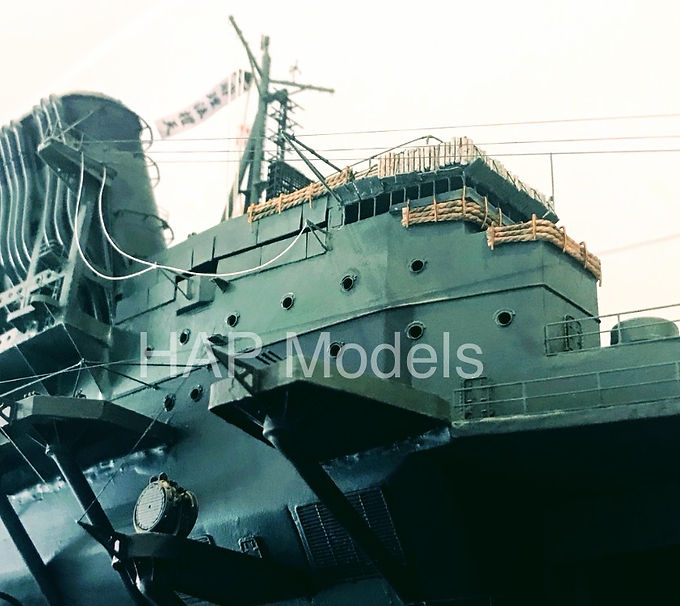
An imposing view.

The flight deck paintings were studied and adopted to the courtesy of Mr. Ohki Seitaro in his model exhibited in 'Model Graphix Navy Yard Special Issue 2' in 2008.

A good duet with another 1/200 IJN battleship, Kongo.
